교통 · Transport
How to Get Around South Korea ?
M
Matthieu Queru전설Publié le 30 June 2026
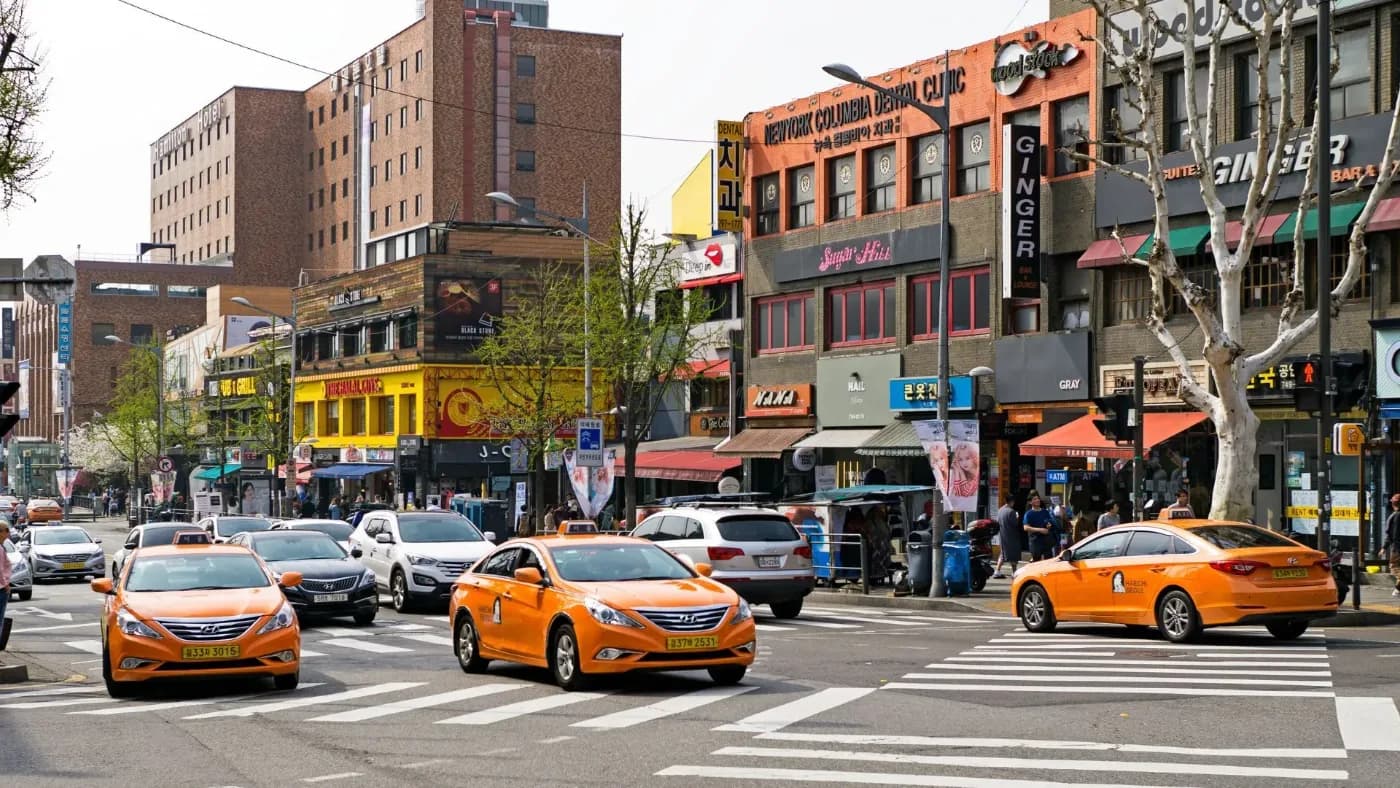
Getting Around South Korea
One of the first things you'll notice after arriving in South Korea is how efficient and well-organized its public transportation system is. Clean subways, high-speed trains, comfortable long-distance buses, and affordable taxis make getting around the country incredibly easy.
During your exchange year, you'll likely use public transportation almost every day—whether you're commuting to university, meeting friends, or exploring Korea during weekends and holidays.
In this guide, we'll cover the main transportation options available in South Korea, explain how they work, discuss their advantages and disadvantages, provide approximate costs, and recommend the best apps and services to help you travel with confidence throughout your stay.
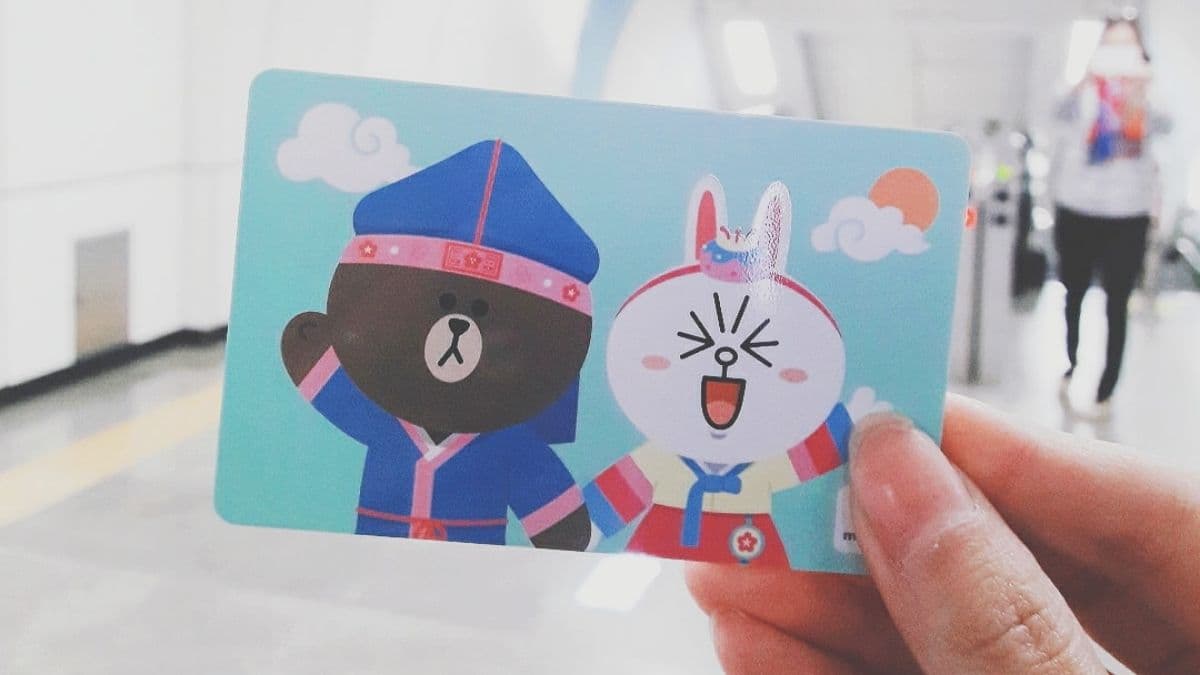
The T-money Card: Your Must-Have for Getting Around Korea
If there's one thing you should buy as soon as you arrive in South Korea, it's a T-money card.
This rechargeable transportation card is used by millions of Koreans every day and will quickly become an essential part of your exchange year. It allows you to pay for public transportation without having to purchase a ticket for every trip.
You can use your T-money card for:
Subways
City buses
Most taxis
Selected convenience stores and partner merchants
Where can you buy a T-money card?
You can easily purchase one at:
Convenience stores (CU, GS25, 7-Eleven, emart24, etc.)
Most subway stations
Selected shops and transportation counters at Incheon International Airport
The card itself usually costs between 3,000 ₩ and 5,000 ₩, after which you'll need to load it with credit.
How do you top it up?
Reloading your T-money card is quick and easy.
You can add credit:
At convenience stores
At ticket or recharge machines in subway stations
Simply choose the amount you want to load and pay using cash or, depending on the location, a bank card.
💡 Our recommendation
When you first arrive, load your card with around 20,000 ₩ to 30,000 ₩. This should be more than enough for your first few days while you settle in.
Why use a T-money card instead of buying tickets?
Although it's possible to buy a ticket for every journey, using a T-money card is much more convenient.
It allows you to:
Save time
Avoid waiting at ticket machines
Benefit from slightly lower fares on some journeys
Receive automatic transfer discounts between buses and subways
If you'll be using public transportation almost every day—as most exchange students do—a T-money card quickly becomes indispensable.
Can you get your remaining balance back?
Yes.
Before leaving South Korea, you can request a refund for the remaining balance at most convenience stores or selected subway station service counters. Please note that a small service fee may apply depending on the amount being refunded
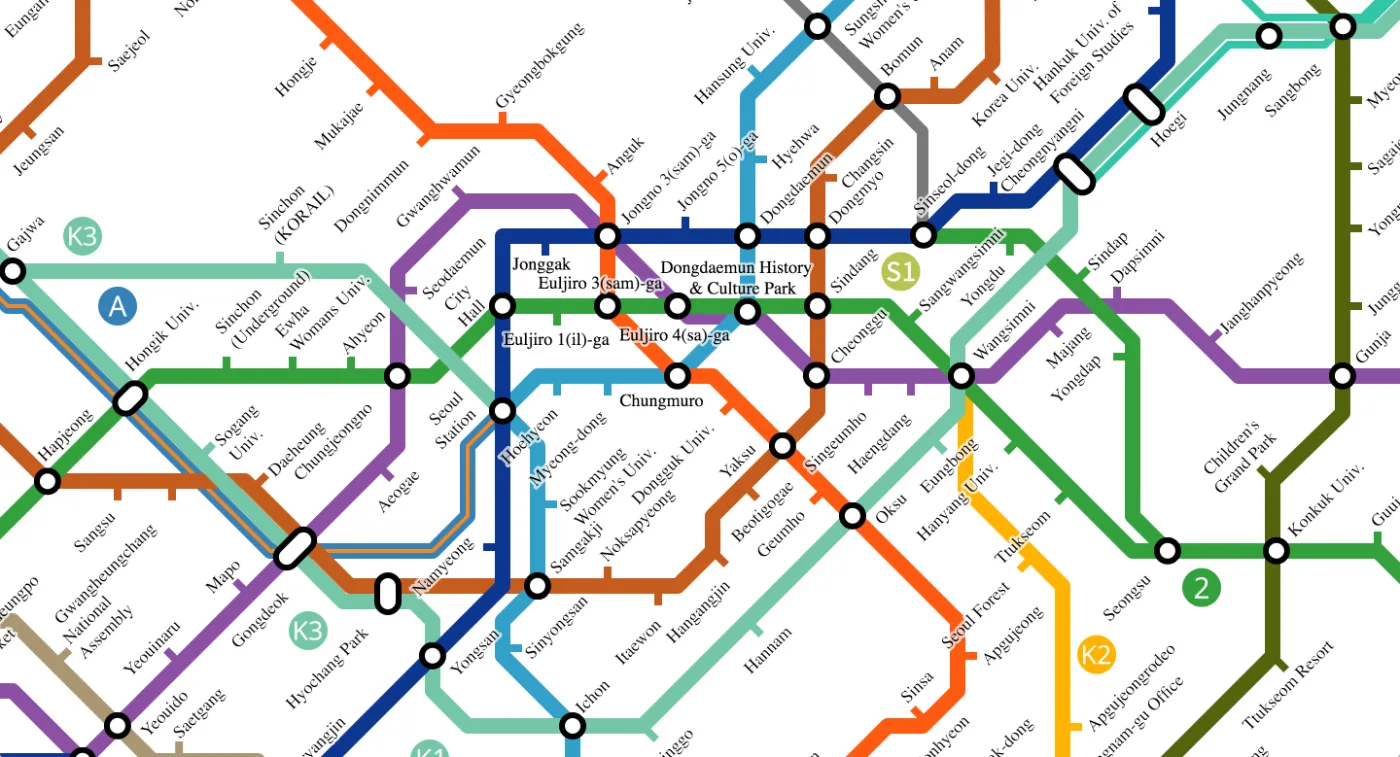
The Subway: Your Main Way of Getting Around
The subway is undoubtedly the mode of transportation you'll use the most during your stay in South Korea. Whether you're commuting to university, meeting friends, shopping, or sightseeing, it's fast, clean, safe, and extremely reliable.
Major cities such as Seoul, Busan, Daegu, Daejeon, and Incheon all have extensive subway networks that are easy to navigate. Stations are clearly signposted in both Korean and English, and each line is identified by a color and a number, making the system very beginner-friendly.
How much does it cost?
The fare depends on the distance you travel, but most subway rides cost between 1,400 ₩ and 2,000 ₩ when using a T-money card.
Even longer journeys remain very affordable compared to many other countries.
How do you plan your route?
We highly recommend using Naver Map for all your trips.
The app provides:
The fastest route available
Real-time departure and arrival information
Transfer instructions
The correct subway platform
Exit numbers
Estimated travel times
A great alternative is Kakao Map, which is also widely used throughout Korea.
⚠️ We do not recommend using Google Maps.
Unlike in many other countries, Google Maps offers very limited navigation features in South Korea and often provides incomplete or inaccurate public transportation routes.
What are subway stations like?
Most stations are equipped with everything you might need, including:
T-money recharge machines
Convenience stores
Free public restrooms
Lockers for luggage (at larger stations)
Elevators and escalators
Many stations also feature platform screen doors, which improve both safety and comfort while waiting for your train.
Our opinion
South Korea's subway system is one of the easiest and most enjoyable public transportation networks to use.
It is clean, punctual, affordable, and extremely efficient, making it the perfect choice for your daily commute throughout your exchange year.
💡 Tip
When using Naver Map, always pay attention to the recommended exit number. Large stations can have dozens of exits, and choosing the correct one can save you several minutes of walking.
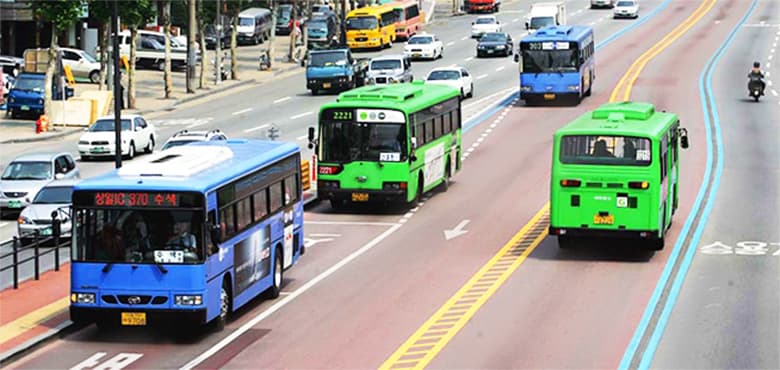
City Buses: The Perfect Complement to the Subway
While the subway is the most popular way to get around, it doesn't reach every part of the city. That's where the city bus network comes in.
In cities like Daegu, buses are often the quickest way to reach certain neighborhoods, shopping areas, or even parts of the university campus. They are frequent, reliable, and cover areas that aren't always accessible by subway.
How do you pay?
Paying is simple.
Just tap your T-money card on the card reader when you board the bus.
⚠️ Don't forget to tap your card again when getting off.
This allows the system to calculate the correct fare and apply transfer discounts between buses and subways.
💡 If you forget to tap out, your next trip may cost more than expected.
How much does it cost?
The fare varies slightly depending on the city and the type of bus, but you can generally expect to pay between 1,500 ₩ and 2,000 ₩ when using a T-money card.
Transfers between buses and the subway are often free or discounted when made within a certain time limit.
How do you know which bus to take?
The easiest way is to use Naver Map.
Simply enter your destination and the app will tell you:
Which bus to take
Where to board
Where to get off
Real-time arrival information
The number of stops remaining
Estimated travel time
You don't need to memorize bus numbers—just search for your destination.
Are buses difficult to use?
Not at all.
Bus stops are clearly marked, and most buses display the next stop on digital screens. In many cities, announcements are made in both Korean and English.
After just a few trips, using the bus becomes as easy as taking the subway.
Our opinion
Don't limit yourself to the subway.
City buses are reliable, comfortable, and often the fastest option for reaching places that aren't directly connected to the subway network.
With Naver Map guiding you every step of the way, they're much easier to use than they might seem at first.
💡 Tip
If several bus lines stop at the same bus stop, make eye contact or give a small wave to the driver as your bus approaches. This lets them know you want to board—a very common practice in South Korea.
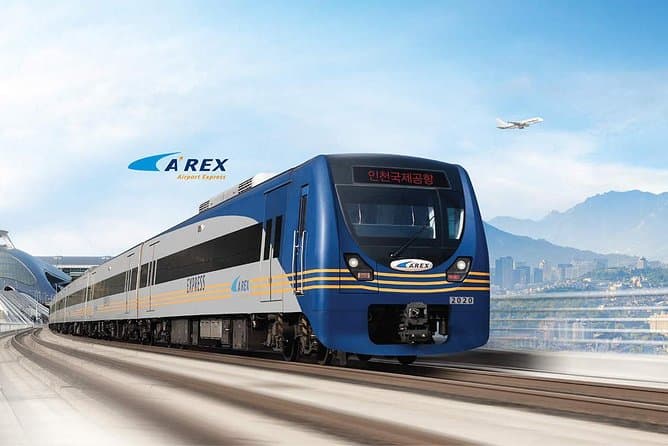
Getting from Incheon Airport to Seoul
For most international students, your journey in South Korea will begin at Incheon International Airport (ICN). After collecting your luggage, your first challenge will be getting to Seoul before continuing your trip to Daegu or another destination.
Fortunately, it's very easy.
The fastest and most convenient way to reach Seoul is by taking the AREX (Airport Railroad Express), which connects Incheon Airport directly to the city.
There are two different services available: AREX Express and AREX All Stop Train.
🚄 AREX Express
The AREX Express is a non-stop train that runs directly between Incheon International Airport and Seoul Station.
Travel time is approximately:
43 minutes from Terminal 1
51 minutes from Terminal 2
The ticket costs approximately 13,000 ₩.
Advantages
Fastest way to reach Seoul
Reserved seating
Comfortable luggage space
Free Wi-Fi
Ideal if you're carrying several suitcases
Disadvantages
More expensive
Only stops at Seoul Station
🚇 AREX All Stop Train
The All Stop Train works like a subway line, stopping at every station between Incheon Airport and Seoul.
Travel time is approximately 60 to 70 minutes, depending on your destination.
A ticket costs around 4,500 ₩ to 5,000 ₩ when using a T-money card.
Advantages
Much cheaper
Stops at several areas of Seoul
Frequent departures throughout the day
Disadvantages
Longer journey
Can become crowded during rush hour
No reserved seats
Which one should you choose?
If your destination is Seoul Station, or if you're traveling with several large suitcases, we recommend taking the AREX Express.
If you're trying to save money or your accommodation is located near one of the stations served by the All Stop Train, then the AREX All Stop is an excellent alternative.
How do you buy a ticket?
You can purchase your ticket:
At the ticket machines inside the airport
At the AREX ticket counters
On the official AREX website
Through travel platforms such as Klook
For the All Stop Train, simply tap your T-money card at the ticket gates, just like you would on the subway.
💡 Our recommendation
If you're heading to Daegu by KTX, take the AREX Express.
It will take you directly to Seoul Station, where most KTX trains depart, allowing you to transfer easily without dragging your luggage through multiple subway stations.
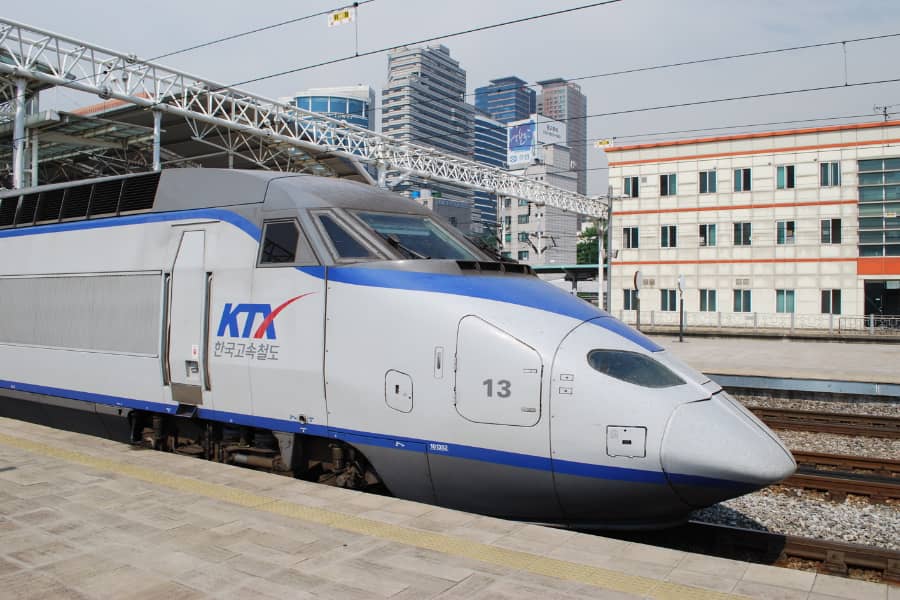
Traveling Between Cities: KTX & ITX
One of the best parts of studying in South Korea is how easy it is to explore the country. Whether you're planning a weekend in Busan, visiting the historic city of Gyeongju, hiking in Gangneung, or spending a few days in Seoul, Korea's railway network makes traveling fast and convenient.
The two main types of intercity trains you'll come across are the KTX and the ITX.
🚄 KTX (Korea Train eXpress)
The KTX is South Korea's high-speed train, similar to the French TGV or the Japanese Shinkansen.
It connects the country's largest cities in just a few hours.
Here are a few examples:
Seoul → Daegu: approximately 1 hour 40 minutes
Seoul → Busan: approximately 2 hours 30 minutes
Daegu → Busan: approximately 50 minutes
Ticket Prices
Prices vary depending on your destination and the time of booking.
On average:
Seoul → Daegu: 40,000–50,000 ₩
Seoul → Busan: 55,000–65,000 ₩
While KTX tickets are more expensive than buses, they save a considerable amount of travel time.
Advantages
Fastest way to travel across Korea
Comfortable seats
Very punctual
Spacious luggage areas
Ideal for weekend trips
Disadvantages
More expensive than buses
Popular routes can sell out during holidays and long weekends
🚆 ITX (Intercity Train eXpress)
The ITX is a conventional intercity train that connects many cities not always served by the KTX.
Although slower, it can be a good option depending on your destination.
Advantages
More affordable tickets
Stops at more stations
Good alternative when KTX is unavailable
Disadvantages
Longer travel times
Available only on selected routes
How to Book Your Tickets
Booking train tickets is very straightforward.
You can book through:
KorailTalk, the official Korail mobile app
The official Korail website
Ticket machines available in most train stations
Station ticket counters
The KorailTalk app is available in English and allows you to purchase, modify, or cancel your tickets directly from your phone.
💡 Tip
If you're planning to travel during Chuseok, Seollal, or university holidays, book your tickets as early as possible. KTX trains on popular routes often sell out several days—or even weeks—in advance.
If your priority is reaching your destination as quickly as possible, the KTX is undoubtedly the best choice.
However, if you're not in a hurry or your destination is served by the ITX, it offers a more affordable and equally comfortable travel experience.
For most exchange students, the KTX will be the train you use most often to explore South Korea.
💡 Good to Know
Unlike airports, Korean train stations require very little waiting time. Arriving 15 to 20 minutes before departure is usually more than enough to find your platform and board your train.
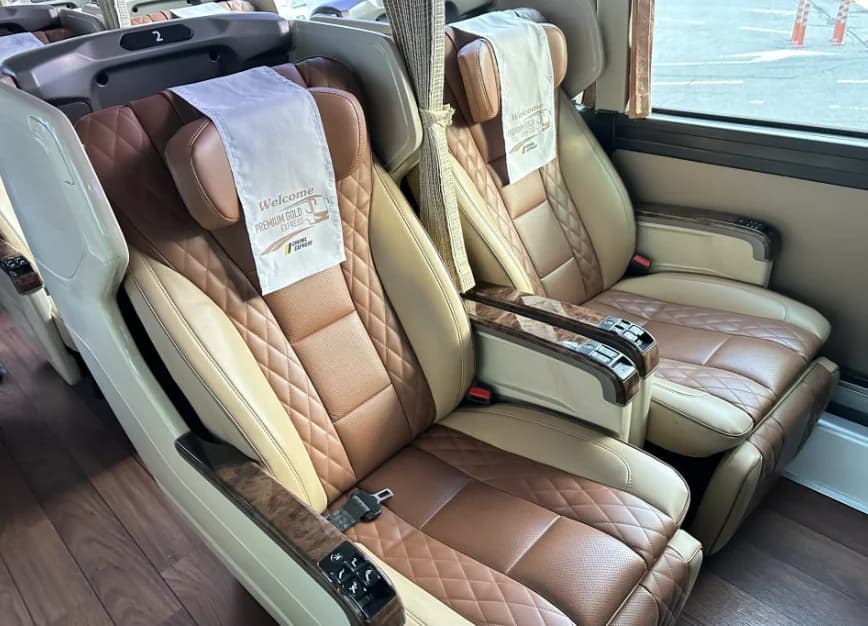
Intercity Buses: The Best Alternative to Trains
Although the KTX is the most well-known way to travel around South Korea, intercity buses are an excellent alternative that many international students quickly come to love.
South Korea has one of the best long-distance bus networks in the world. Buses are punctual, clean, comfortable, and connect almost every city in the country. They're also often significantly cheaper than the KTX, making them an excellent option for students traveling on a budget.
For many routes, especially if you're not in a hurry, we actually recommend taking the bus over the train.
In South Korea, you'll mainly come across two types of long-distance buses:
Express Bus (Standard)
Premium Express Bus
🚌 Express Bus
Express Buses connect the country's largest cities through an extensive highway network.
They offer an excellent balance between price, comfort, and convenience.
Ticket Prices
Prices vary depending on the destination.
Some examples:
Daegu → Busan: approximately 12,000–18,000 ₩
Seoul → Daegu: approximately 20,000–30,000 ₩
Seoul → Busan: approximately 25,000–35,000 ₩
In most cases, Express Buses are cheaper than the KTX.
Advantages
Excellent value for money
Comfortable seats
Frequent departures throughout the day
Extensive route network
Luggage included at no extra cost
Disadvantages
Longer travel times than the KTX
Travel time may vary depending on traffic conditions
💺 Premium Express Bus
If there's one hidden gem we recommend trying during your exchange year, it's the Premium Express Bus.
These buses are designed for maximum comfort and are often compared to business class on an airplane.
Seats are significantly wider than standard bus seats and usually include:
A deeply reclining backrest
A leg rest
A footrest
Plenty of personal space
Even journeys lasting four or five hours remain extremely comfortable.
Ticket Prices
A Premium Express Bus usually costs only 5,000 to 10,000 ₩ more than a standard Express Bus.
Considering the additional comfort, it's well worth the extra cost.
Advantages
Outstanding comfort
Spacious seating
Quiet cabin
Reclining seats with leg support
Perfect for long journeys
Often still cheaper than taking the KTX
Disadvantages
Slightly more expensive than a standard Express Bus
Fewer departures on some routes
How do you book a ticket?
You have several options for purchasing your tickets:
Directly at the bus terminal
Self-service ticket machines
KOBUS (official Express Bus booking platform)
Bustago (official platform for many Intercity Bus routes)
TxBus (covers additional regional routes)
Most of these services also offer mobile applications, although their English interfaces may vary.
If you're only making an occasional trip and it's not a busy travel period, buying your ticket directly at the terminal is usually the easiest option.
Bus Rest Stops
One thing that surprises many international students is the quality of Korean highway rest areas.
On longer routes, buses usually stop for 10 to 20 minutes at a service area where you'll find:
Restaurants
Coffee shops
Convenience stores
Local snacks
Clean restrooms
These stops are an experience in themselves and make long bus journeys much more enjoyable.
If your priority is getting somewhere as quickly as possible, the KTX is still the best choice.
However, if you're looking for the best balance between comfort, price, and convenience, we highly recommend trying a Premium Express Bus.
Personally, it's one of our favorite ways to travel around Korea. The comfort is exceptional, tickets are affordable, and the journey itself becomes part of the experience.
💡 Tip
During major holidays such as Chuseok and Seollal, buses can sell out just as quickly as trains. If you're planning to travel during these periods, make sure to reserve your seat as early as possible.
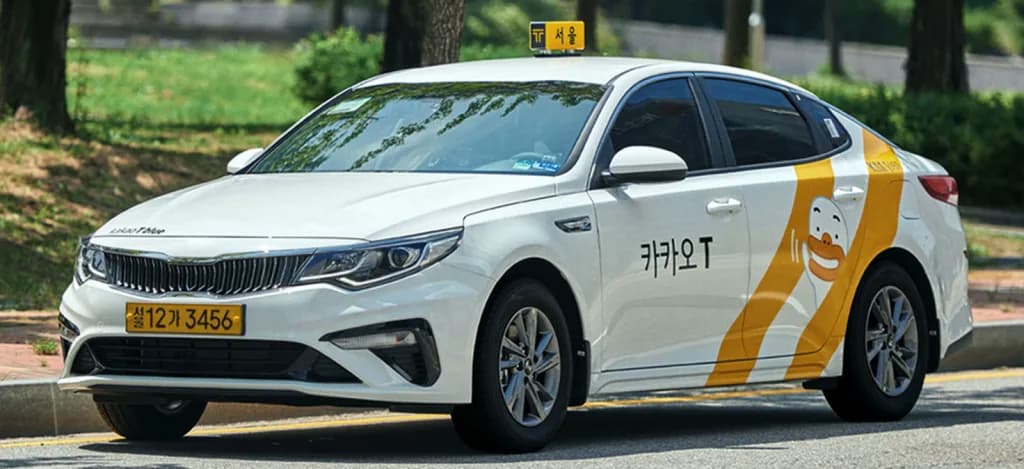
Taxis: Affordable, Convenient, and Available Everywhere
Unlike in many European countries, taking a taxi in South Korea is surprisingly affordable. Whether you're returning home after a night out, traveling with luggage, or simply don't feel like using public transportation, taxis are a convenient option that won't break the bank.
They're also extremely easy to find, especially in large cities such as Seoul, Daegu, and Busan. You can either hail one directly from the street or book one through a mobile application.
How much does a taxi cost?
Taxi fares vary slightly depending on the city, but they remain very reasonable.
As a general idea:
Starting fare: around 4,800 ₩ in Seoul (slightly different depending on the city)
Short ride within the city: 6,000–12,000 ₩
Longer ride: 15,000–30,000 ₩
For groups of three or four people, taking a taxi is often just as affordable as using public transportation.
⚠️ Late-night surcharges usually apply after 10 PM or 11 PM, depending on the city.
How do you pay?
Most taxis in South Korea accept multiple payment methods:
Credit and debit cards (Visa, Mastercard, Revolut, etc.)
T-money cards (on most taxis)
Cash
You generally don't need to carry cash specifically for taxis.
Booking a Taxi with Kakao T
While you can simply hail a taxi from the street, we highly recommend downloading Kakao T, South Korea's most popular taxi-hailing app.
With Kakao T, you can:
Book a taxi in just a few taps
View the estimated fare before your trip
Automatically send your destination to the driver
Track your driver's arrival in real time
Avoid language barriers
The app is available in English and is widely used by both locals and international visitors.
What About Uber?
Uber operates in South Korea under the name UT (Uber Taxi).
Although it works well in major cities, it is still much less popular than Kakao T and generally offers fewer available drivers.
For that reason, Kakao T remains our recommended option.
Do Taxi Drivers Speak English?
It depends.
Some drivers in tourist areas speak basic English, but many do not.
Fortunately, if you use Kakao T, your destination is automatically sent to the driver, eliminating most communication issues.
If you decide to hail a taxi directly, it's always a good idea to have your destination saved in Naver Map so you can simply show it to the driver if needed.
Don't hesitate to use taxis during your stay in Korea.
They're clean, safe, reliable, and much more affordable than many students expect.
Whether you're carrying heavy luggage, traveling late at night, or splitting the fare with friends, taxis are often one of the easiest and most comfortable ways to get around.
💡 Tip
If you're traveling with friends, always compare the taxi fare with public transportation. In many cases, splitting the cost between three or four people makes taking a taxi almost as cheap as taking the subway or bus—while saving you time and offering much greater comfort.
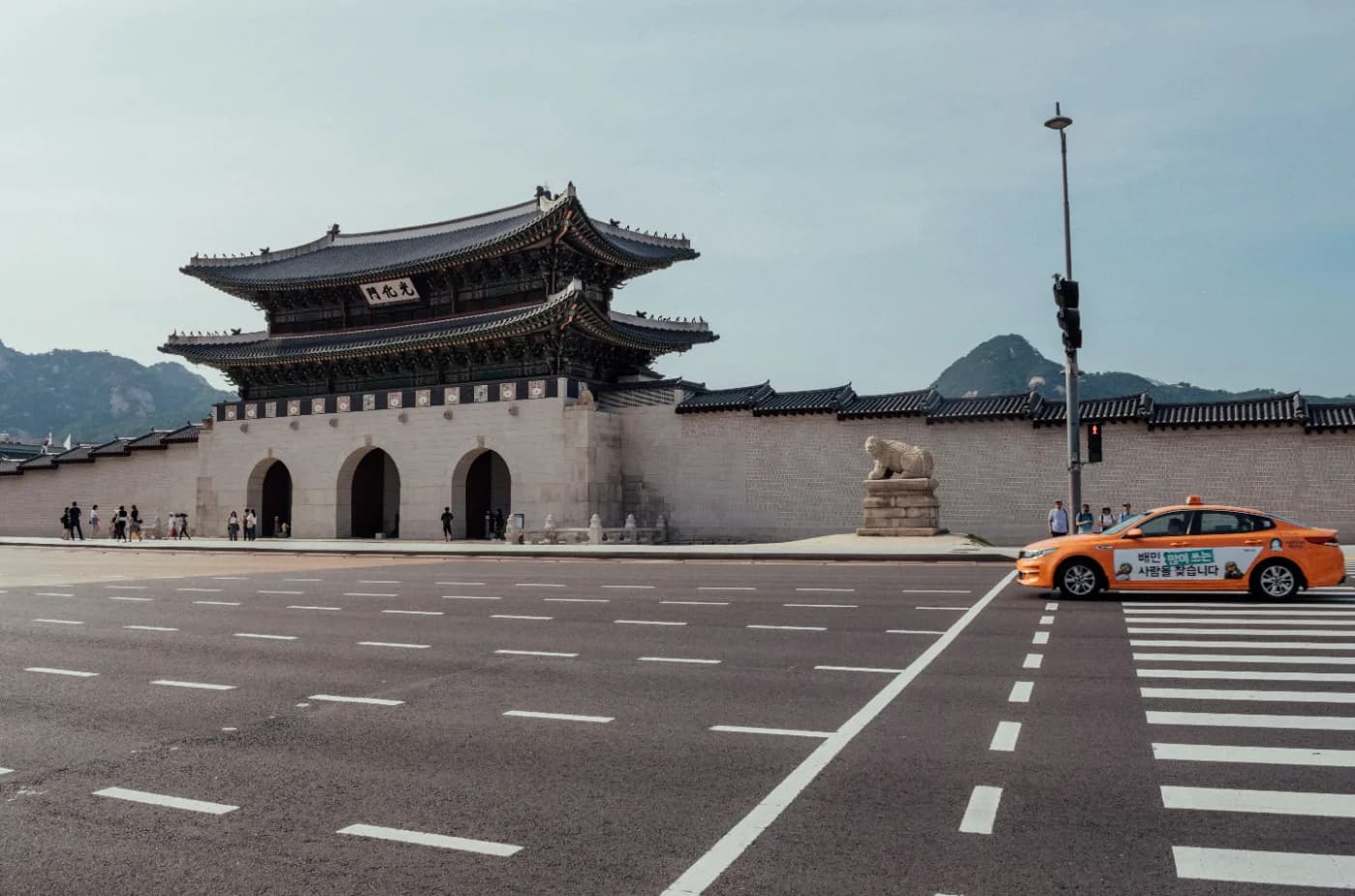
Conclusion
Getting around South Korea is one of the easiest aspects of everyday life during your exchange year. Thanks to an extensive, reliable, and affordable transportation network, you'll be able to travel almost anywhere in the country without needing a car.
To summarize our recommendations:
🚇 Subway for your daily commute around the city.
🚌 City buses to reach places not served by the subway.
💳 Get a T-money card as soon as you arrive—it will quickly become one of the most useful things you own.
🚄 KTX when you want to travel quickly between major cities.
🚌 Premium Express Buses if you're looking for the best balance between comfort and price.
🚕 Taxis for late-night trips, traveling with luggage, or when sharing the fare with friends.
Our final piece of advice is simple: travel as much as you can.
Your exchange year is a unique opportunity to discover South Korea beyond your university city. Whether it's the beaches of Busan, the history of Gyeongju, the energy of Seoul, the mountains of Gangwon-do, or the volcanic landscapes of Jeju Island, every region has something different to offer.
With such an efficient transportation system, exploring the country has never been easier.
Enjoy your journey, make unforgettable memories, and take every opportunity to discover everything South Korea has to offer. 🇰🇷✈️
ce guide t'a aidé ?